Rupee at ₹90: What’s Driving the Fall Despite India’s Strong Growth?
by kavish raj singh | Mar 6, 2026
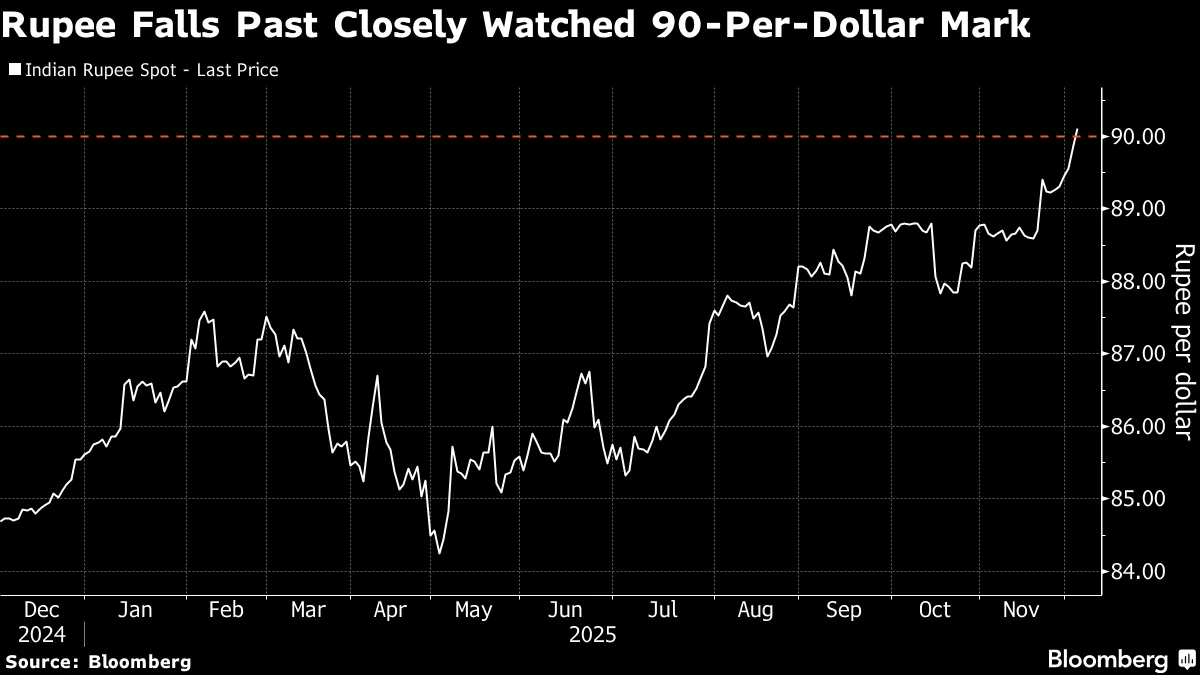
The Indian rupee fell past a psychological level of ₹90 per dollar to an all-time low this Wednesday.
As the Indian rupee is acting as a cushion to US tariffs, it can further deteriorate unless and until there is a trade deal finalized between the two nations. The rupee has always played a central role in India’s political landscape, as strengthening of the Indian rupee is directly linked with the growth of the economy. But what’s contradicting is the fact that India reported 8.2 percent YoY growth in Q2 GDP numbers, which is quite good compared to other global economies, and despite these good numbers, the Indian rupee is depreciating.
Source- The Indian Express Explainer
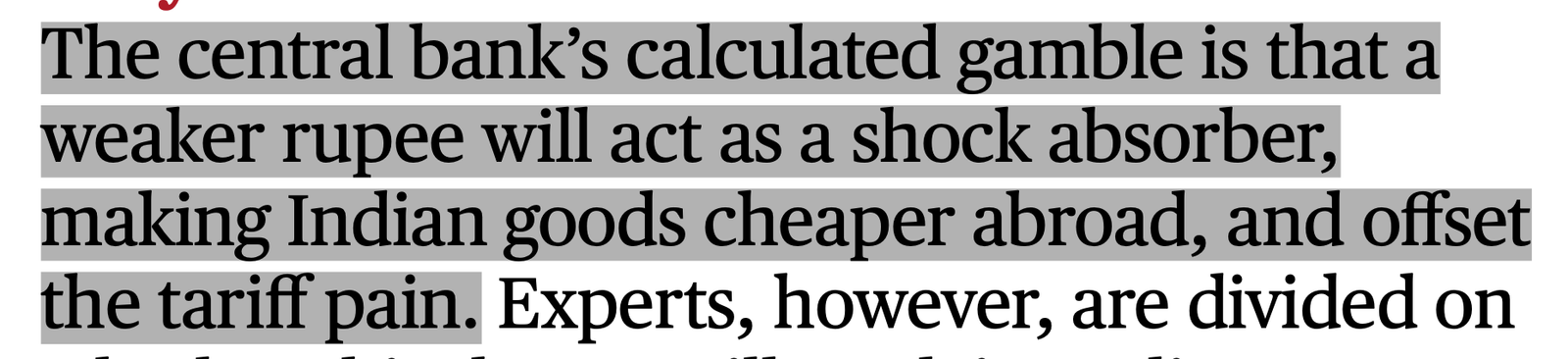
The Indian rupee is the worst-performing Asian currency this year despite dollar weakness. INR has depreciated almost 5 percent this year. It showed a chance of recovery in the month of May when Prime Minister Narendra Modi visited Washington DC after the fresh US tariffs were announced, in the anticipation that India would be among the first few nations to strike a deal with the US, but that didn’t happen. India was imposed with a 25 percent tariff initially, and an additional 25 percent tariff was imposed as a penalty for buying Russian crude oil. After this, the Indian rupee acted as a cushion to the higher tariff, which further depreciated it.
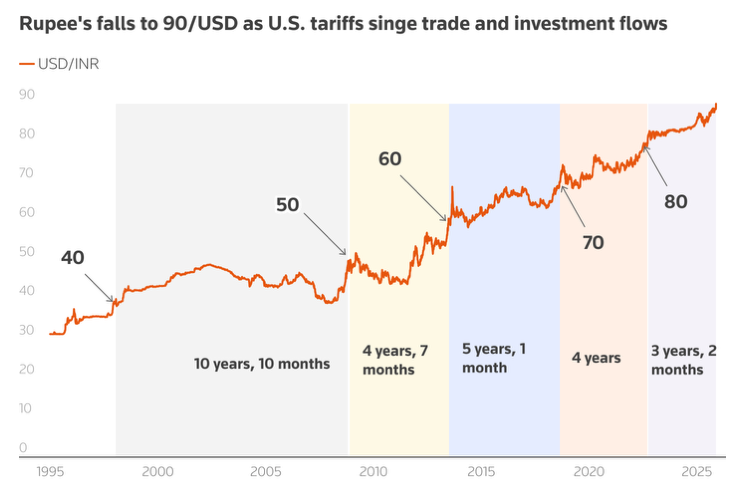
Now the question arises: is the economic welfare of the nation responsible for this steep fall in INR?
Let’s deep dive and understand how the rupee has performed over the past few years and what the takeaways from that are.
INR has been a depreciating asset since the 2000s. The rupee has depreciated every year, post the Modi era and also before that.
Weakening of the rupee was the topic of discussion during the 2014 election, which the opposition party BJP used aggressively against the PM Manmohan Singh government, promising rerating of the Indian rupee post the taper tantrum issue and UPA dispensation, but they failed to deliver those promises, as INR has depreciated every year since 2014.
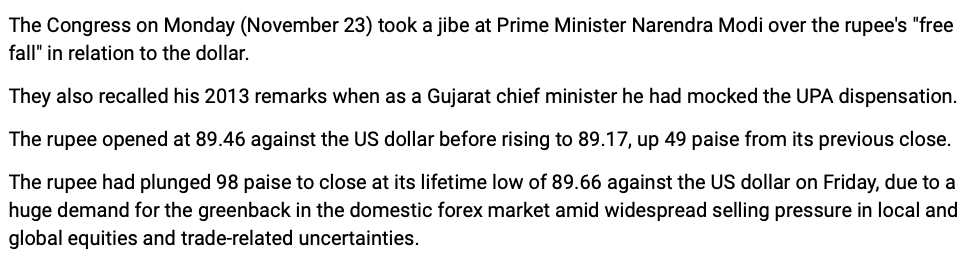
So, as per my understanding, it is quite unfair to blame the government for rupee depreciation, because for the past 40 years the rupee has depreciated irrespective of who was in power. There are several global economic factors behind this depreciation, and those should not be the focal point of a political debate right now.”
Further in the blog, we’ll understand in depth why INR is falling.
but let’s just pause and talk about why the dollar is weakening.
This is somewhat a strategic play by the Trump government to make dollar weaker.
But how?
As we all know, Trump’s entire election campaign was based on MAGA (Make America Great Again), which means bringing back manufacturing in the US and reducing fiscal deficit to a great extent by imposing tariffs on US imports. And he deliberately wanted the FED to cut rates so that the rates on US bonds come down subsequently and people start buying bonds, which will further weaken the dollar when other global currencies are rising.
But why weaken the dollar?
Trump’s top economic advisor Steven Miran released a paper regarding the overvaluation of the dollar, which will help you understand in depth why overvaluation of the dollar is a way that makes manufacturing go away from the US to China. And they also blame this overvaluation as the reason for the high fiscal deficit.
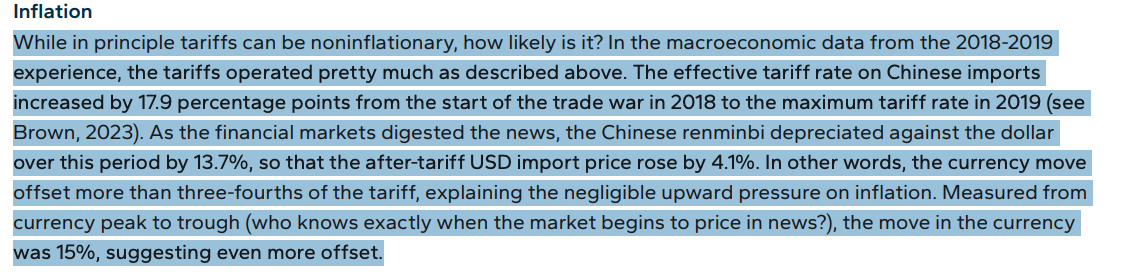
Snapshots from the report that gave me a clarity over the overvaluation of the dollar. This is an entire topic of discussion which we will cover some other day.
Source- Hudson Capital Report
Source- Hudson Capital Report
Source-
https://www.hudsonbaycapital.com/documents/FG/hudsonbay/research/638199_A_Users_Guide_to_Restructuring_the_Global_Trading_System.pdf
NOW let’s go deep and understand why INR is falling.
To understand this, we need to know what the Balance of Payments is.
It constitutes of two things — Capital Account and Current Account.
These are the foreign inflows termed as Foreign Portfolio Investments and Foreign Direct Investments.
How is this even related to weakening INR?
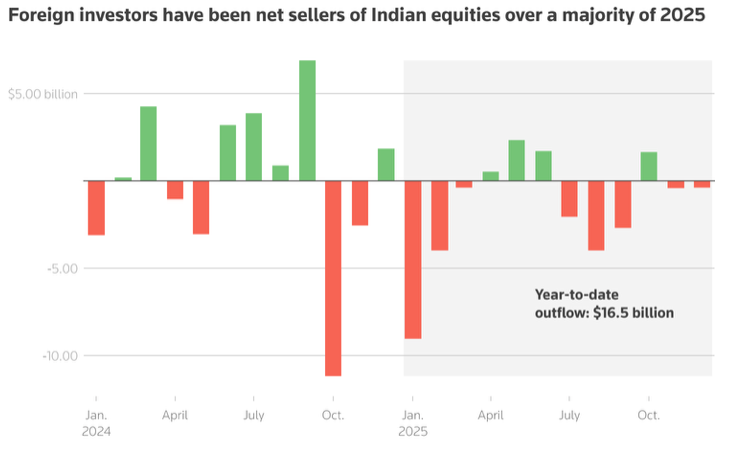
FPIs (or FIIs) are constantly on a selling streak this year due to various reasons such as overvaluation of Indian equity markets, or a better opportunity outside of India.
In our case, money was flowing out of India and entering into China and Hong Kong markets because they were undervalued and producing better earnings growth.
But Kavish, India is the fastest-growing economy in the world, but still FIIs are selling — why?
Short answer: due to overvaluation of equity markets. Indian equity markets have also gone through a time correction of one year, but still they are slightly overvalued despite earnings pickup in Q2. (India’s equity market is also the worst-performing emerging market.)
Also, one of the main reasons could be the booming IPO market of India, where early foreign investors are taking exits, as private equity and venture capital firms exit earlier investments.
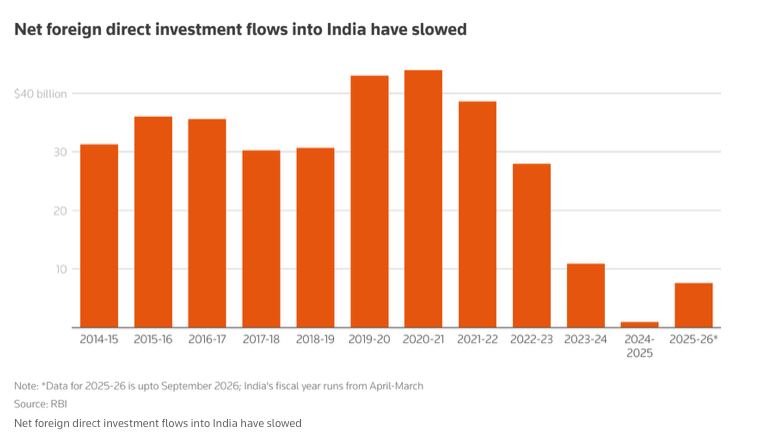
The weakness of portfolio investments coincided with a slowdown in FDIs, which further added pressure to the rupee.
And as FIIs and FDIs are selling consistently, that created an imbalance between the supply and demand for dollars in India.
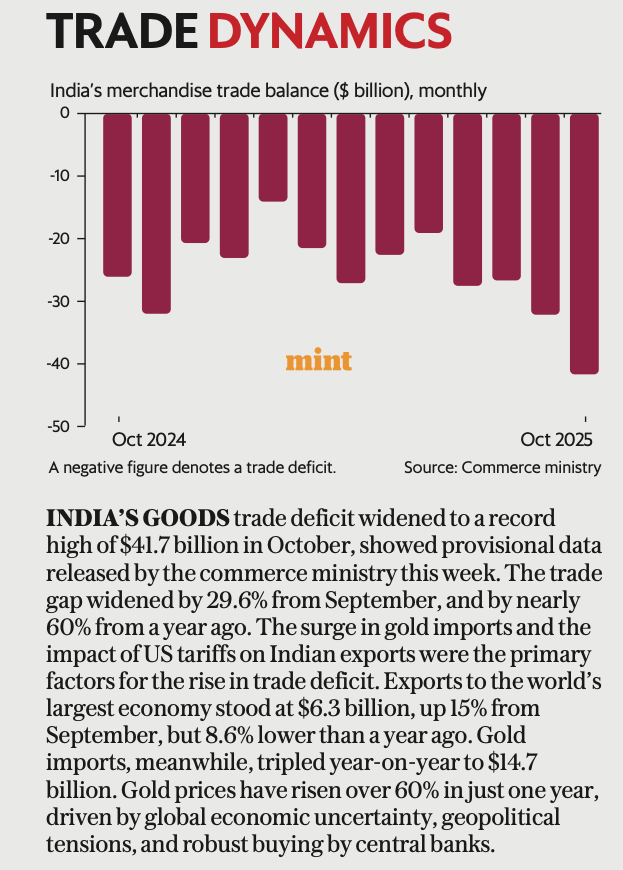
Due to the rising trade deficit, India is importing more than exporting, which further implies that dollars are going out of the economy, putting pressure on the Indian rupee.
Source- The Mint(21/11/2025)
Secondly, increased imports of gold and silver in India also put pressure on the rupee. After a sharp rally of over 60 percent in gold over 1 year, there has been an increase in Gold ETFs in the country, and to support these ETFs you need to back them up with physical gold, due to which there has been a spike in imports of gold and silver.
Why is RBI not interfering to support the Indian rupee?
YES, RBI does intervene when there is excess volatility in the spot market by selling more dollars, which shrinks INR liquidity in the market.
What happens if INR liquidity is low?
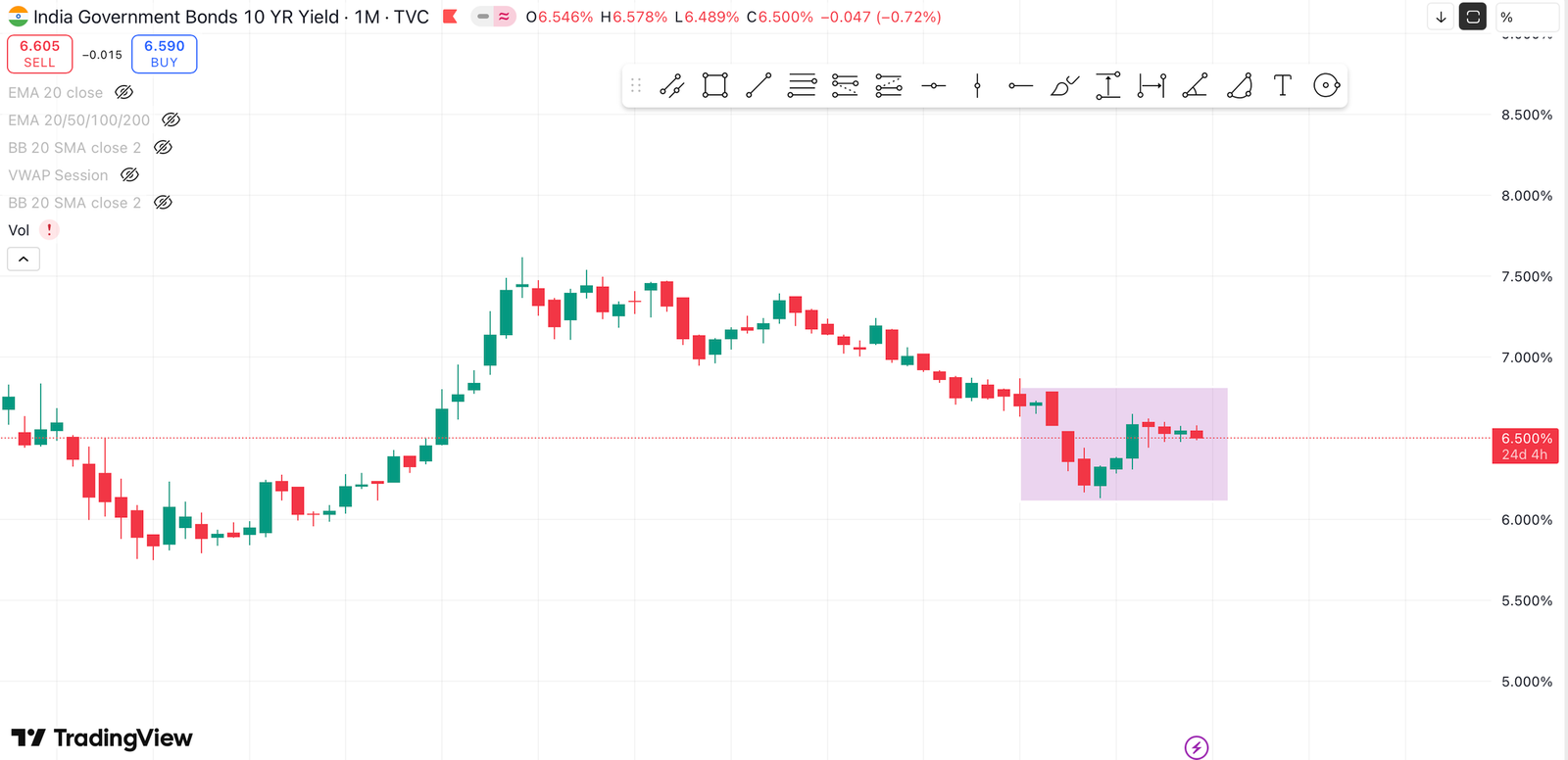
As the market gets short of rupee, banks have less liquidity to buy government bonds, which results in bond yields moving higher and interest rates tightening, despite RBI repo rate cuts.
This is one of the reasons why, despite RBI rate cuts, government bond yields are not coming down.
But Kavish, why can’t RBI control the currency at a certain level?
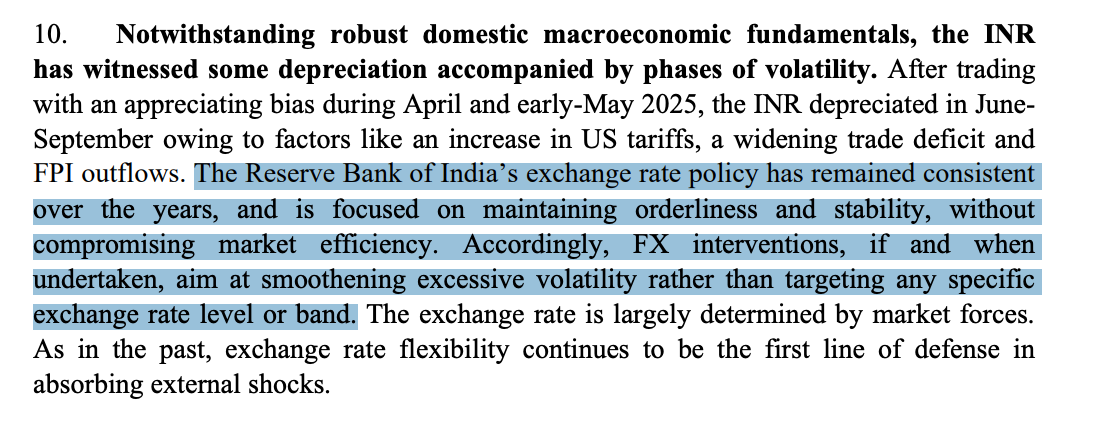
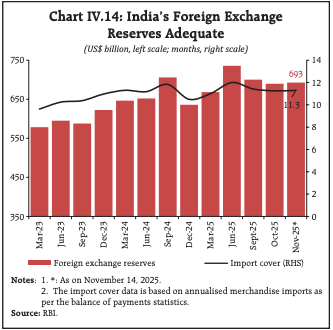
In simple language, we don’t have an unlimited amount of reserve surplus to defend the rupee at every level. So if RBI starts taking control over the levels, foreign institutions and people like George Soros will take advantage and start shorting the rupee. And as we have a limited amount of surplus, the INR will at some point collapse as the reserves will start to deplete.
Source- The RBI November Bulletein
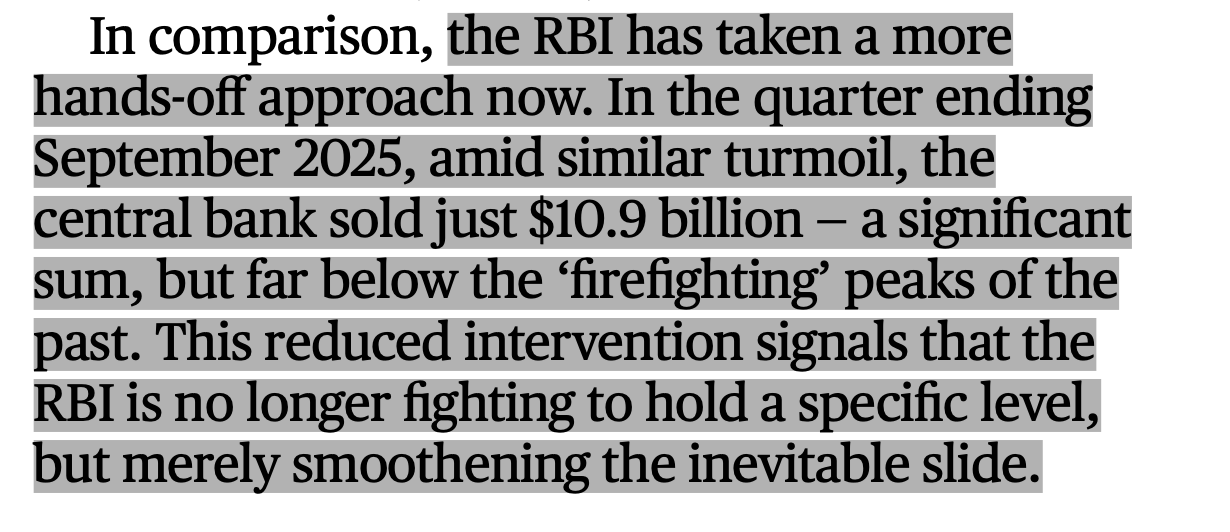
In previous high-pressure episodes, the central bank aggressively defended the currency, selling over $30 billion in the quarter ending September 2022 and nearly $38 billion in the quarter ending December 2024.
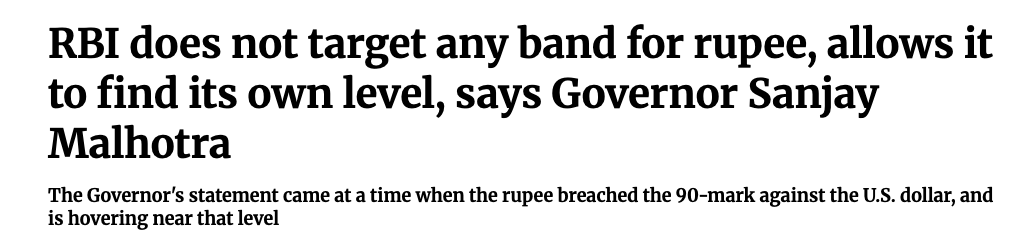
Why not now? Rupee is at its all-time low. RBI should intervene and support it, right?
Source- The Indian Express Explainer
To conclude, the rupee depreciation we are witnessing today is not a sudden event, nor is it purely driven by domestic policies. It is mainly the outcome of global macro conditions, capital flow dynamics, trade imbalances, and liquidity tightening, while RBI continues to manage volatility without burning excessive reserves. Blaming the government for the rupee’s weakness does not make sense because the rupee has depreciated consistently for the past 40 years, irrespective of who was in power.
Source- The Economic Times
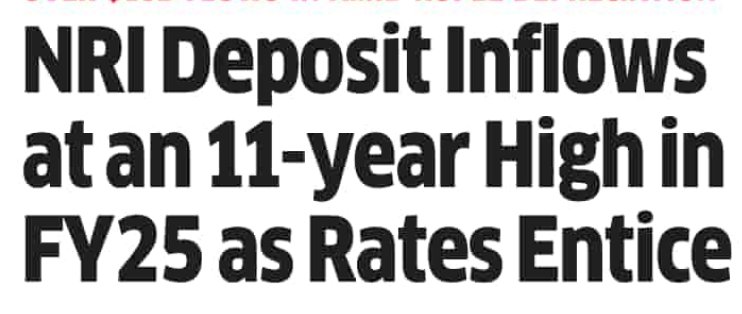
Now, the depreciation trend has created different behavioural incentives in the market. Exporters are delaying exports because they expect the rupee to fall even further, so they will get more rupee value for the same dollar later. On the other hand, importers are worried, as their input costs rise when the rupee weakens. And the only set of people benefiting right now are NRIs, as a weaker rupee means they receive a higher amount in INR when sending money back home.