
Zomato’s Food Delivery Model: Scale, Profitability, and Ecosystem Strategy
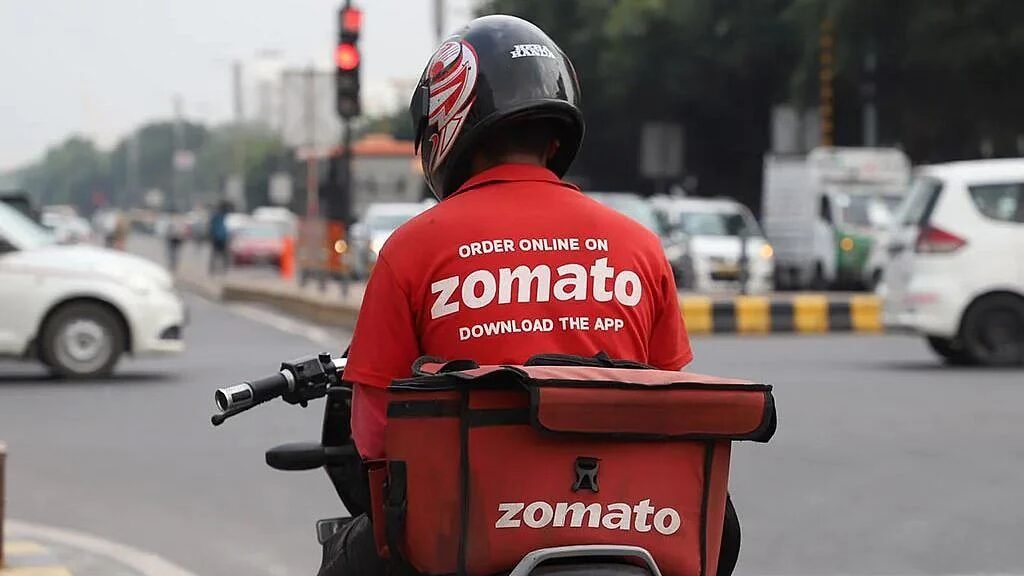
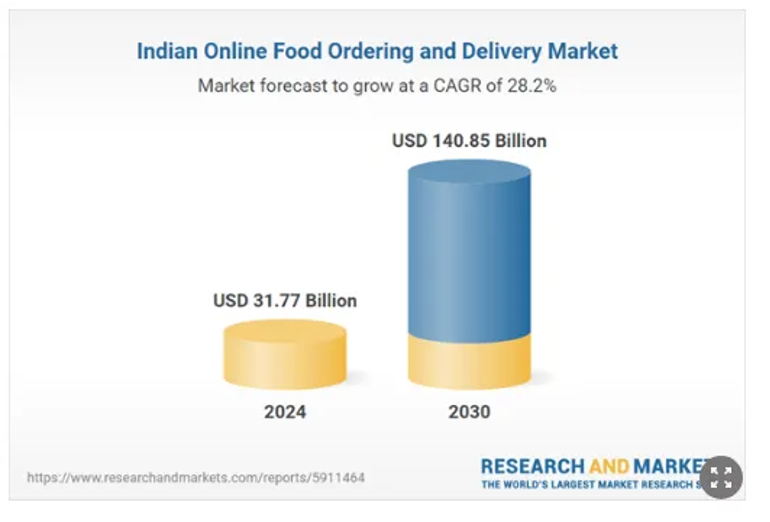
The emerging market of cloud kitchens, AI based personalization and digital payment system will lead the growth in food delivery sector. As cloud kitchens eliminate the cost of dine in services which in return reduces the fixed cost such as rent and front of house staff. Cloud kitchens are becomign a profitable and flexible business model. As the space constraints and urban demand rise, cloud kitchen will play a major role in food delivery industry. Abiility to charge higher commissions make cloud kitchens a very attractive proposition to online food delivery companies.But the key concern would always be profitablity as swiggy and zomato both face high customer aquistion cost and depends on deep discounts and offers which increases operation cost.As per my research, in general people will always prefer cost effectiveness. SO at the end one of the company will end up loosing money in the long run.In the Food delivery business the major chunk is played by the logistics demand or the last mile delivery. It involves riders cost, safety, vehicle maintainance and fuel cost.
let’s talk about the future outlook , as per a report by nexdigm, by 2030 leading platform are expected to reduce 40-45 percent recuction in delivery latency through real time traffic alogrithms , predictive inventory stocking and AI assisted kitchen worklows.So if I want to take something away from this report would be that cloud kitchen can grow bigger in food delivery sector accounting for atleast 38 percent of the overall food delivery volumes by 2030.
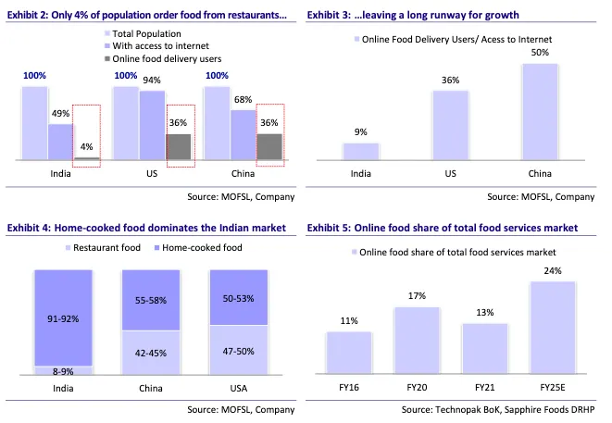
The next of growth will not be lead by urban demand rather it will be by rural penetration, supported by good tech and last mile delivery optimisation. Emerging Technology such as drone delivery is expected to furthur enhance operational efficiency and optimise customer experience.
Companies with high efficiency infrastructure will win the race in the long run.
Scaling up in smaller cities despite low AOV help improve unit economics of big companies due to low labour cost meaning low last mile delivery cost as the cost of delivery goes down. The traffic is low, most of the delivery vehicle is a cycle reducing fuel cost.
Source- IBEF,Research AND MARKET,motilal Oswal,DRHP
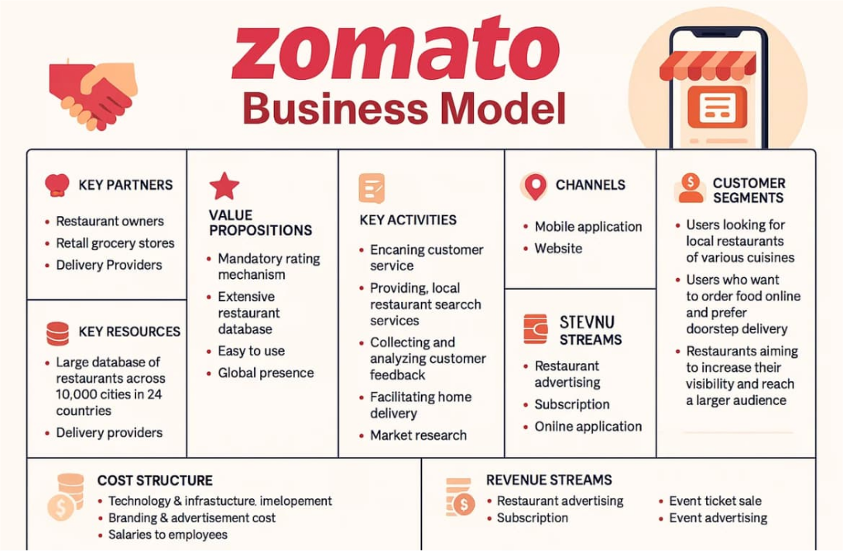
ZOMATO advertising business: Zomato offers premium subscription services to restaurants, which provide additional features and benefits such as enhanced visibility and analytics. Restaurants can pay a monthly or annual fee to access these services. This revenue stream is based on recurring subscription fees. Major source of revenue.
SUBSCRIPTION FEES: Zomato collects and analyzes user behavior and performance data to provide insights to restaurants and other industry stakeholders. This data is valuable to restaurants as it can help them optimize their menus, pricing, and marketing strategies. Zomato also uses this data to improve its platform and services. This revenue stream is based on data licensing fees.
Events and Reservation Fees: Zomato also earns revenue from hosting events and providing restaurant reservation services. This revenue stream is based on event fees and reservation fees.ZOMALAND is one such example , they create an event space by partnering with resto and creating limited events.
ZOMATO gold membership: Zomato offers gold membership to its customers at rupee 99 for 3 months which offers free delivery under 7 km radius and certain specific offers on restaurants.
ZOMATO WHITE LABEL- It is a high margin , asset light B2B consulting business in which zomato provides tech, data and operation expertise to resto for building own branded apps, cloud kitchens at strategic locations with a minimal fixed cost and increase option for user base.
ZOMATO KITCHENS- Zomato provides kitchn infrastructure services to selected resto operators, it works with people to set up and operate zomato kitchens under different labels it offers 2 to 4 lakh rupee per month over an investment of 35 lakhs as the entire backend operation of cloud kitchen is handled by zomato but with different labels. It has close to 180 affiliated kitchens.
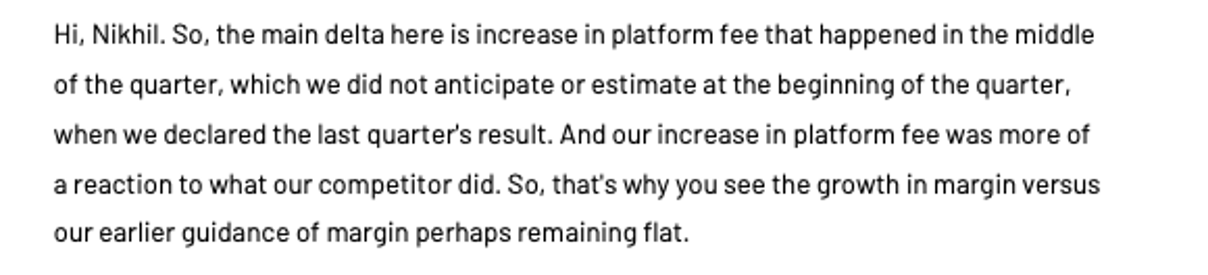
In Q2FY26 , as per the management the food delivery business growth has bottomed out and will see a slow uptick in near term. The long term guidance of management is north of 20 percent. NOV grew by 14 percent YoY and 13 percent YoY.Adjusted EBITDA margin was at all time high of 5.3 percent of NOV. The adjusted EBITDA margin for the last 2-3 quarter is around 5 percent of NOV. They will keep on investing in growth as they remain comfortably within long term guidance on adj EBITDA. Due to increasing competition in food delivery they have reduced the minimum order value to 99 for free delivery from 199 for gold users.
There was an increase in take rate in Q2FY26 in the mid of august 2025 across multiple levels including ad monetization , increase in platform fees and commission rates ye offset hogya due decrease in minimum order value for free delivery to 99 rupee.

A slowdown occurred due to early monsoon and excessive heats during the summer season, soft discreationary income and growth of quick commerce.(POSITIVE MANAGEMENT COMMENTARY ON A SLOW AND STEADY UPTICK).
ZOMATO has moved entirely to NOV as their core metric. (net order value). As they thought GOV displayed a inflated number due to discounts provided by resto owners which in term displayed wrong insights. As they don’t consider the difference between GOV and NOV as growth.Sometimes the subsidy given by the resto is by inflating the menu prices and then the effective amount is paid by the customer. Hence inflating GOV whereas the NOV remains unchanged.
source- shareholder letter Q2FY26
Food delivery wing zomato is adapting a rotational leadership approach in which the CEO will get changed every 2 years. The current CEO of food delivery wing is aditya mangla(product/engineering background). It will help them with new set of ideas,execution, diverse leadership styles.
Zomato’s food delivery business is no longer about chasing growth at any cost. The shift to NOV as a core metric, normalized EBITDA margins around 5%, and investments in cloud kitchens and B2B infrastructure signal a clear move toward sustainable unit economics.
While near-term growth may remain modest due to macro headwinds and the rise of quick commerce, the long-term outcome will be decided by operational efficiency, logistics optimization, and ecosystem depth – not discounts.
In the Indian food delivery market, scale creates visibility, but efficiency creates profitability. Zomato’s strategy suggests it understands this distinction well.